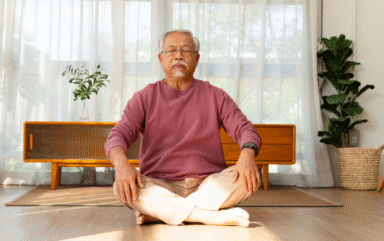
 This section provides you with tools and information you can use to care for your mental health while dealing with chronic disease and pain. Finding a few self-management strategies that work for you can help you manage your overall health. It’s a good idea to talk with your health care provider about how these strategies can fit into your overall arthritis management plan.
Mindfulness Meditation, Deep Breathing, and Relaxation
Meditation, mindfulness, deep breathing exercises, and progressive muscle relaxation are techniques that have been used by many cultures across the world for centuries. These practices are increasingly being recognized by modern Western scientific and medical communities as some of the most effective ways for people to combat stress and improve mental and emotional wellbeing.
Meditation has been practiced for millennia – records of meditation practices have been dated as far back as 5,000 to 3,500 BCE in what is now known as India and Pakistan. Modern scientific study of meditation has shown the powerful connection between our minds and bodies; meditation can help lower heart rate, blood pressure, pain levels, inflammation, and levels of adrenaline and cortisol (stress hormone) in the blood. It can also have a positive effect on your mood and ability to cope with illness, as well as enhance your sense of general wellbeing.
Mindfulness meditation is one of the many types of meditation and is commonly recommended to people living with arthritis. This practice has roots in Buddhist traditions and has influenced modern health care and behavioural support programs like Mindfulness-Based Stress Reduction (MBSR).
Mindfulness meditation involves purposefully paying attention to your thoughts, feelings, and surroundings in the present moment, without judging what you notice. Meditation is a skill and the benefits are often seen over time, so keep practicing and don’t get discouraged if you have a difficult time meditating at first or don’t notice a difference right away.
Meditation is often associated with sitting still and many people enjoy practicing in this way, but others find this doesn’t work well for them. You can try practicing mindfulness meditation while doing a physical activity like walking, dancing, tai chi, or yoga. This approach is sometimes called a moving meditation or mindful movement. You can also try incorporating this mindset by intentionally pausing at points throughout your day to notice your internal feelings and external surroundings for 30-60 seconds at a time, before moving on with your day.
Deep breathing exercises can help you learn to control your breath. This is a helpful skill in times of stress, as rapid, erratic, or shallow breathing is a common response to stress. Regular, deep breaths are a sign of relaxation and can help send a signal to your body that you are safe. You may want to practice deep breathing in a calm situation so that you’ll be familiar with the technique and can use it when you’re stressed. You can even make it a daily practice – try repeating a breathing exercise every day to help ground you, even when you’re having a good day.
Progressive muscle relaxation involves systematically tensing and then relaxing groups of muscles. When you are stressed, you might notice that your muscles tend to be tense and tight, but many people don’t realize that the reverse is also true – tense muscles can affect your mood and make you feel stressed. Progressive muscle relaxation exercises like this one from Johns Hopkins Rheumatology can help you recognize when particular muscles are tightened and help develop your ability to consciously relax them. Over time this allows you to have better control over muscular pain. If you have heart health issues, check with your doctor before trying this approach.
Many of these exercises and techniques are available for free online. Arthritis Society Canada has produced a series of guided meditations and breathing and relaxation exercises that are designed to help you cope with stress and chronic pain.
- Arthritis Advice: Mindfulness (Video)
- Guided Mindfulness Meditation Exercise (Video)
- Mindful Moving Practice
- Meditation for Anxiety and Stress (Video)
- Guided Meditation for Chronic Pain (Video)
- Three-Part Breathing (Video)
- Body Scan Meditation (Video)
Self-Talk

Self-talk is the inner voice we all have and consists of our thoughts, opinions, beliefs, and values. The way you talk to yourself can shape your mindset and influence your overall wellbeing.
Negative self-talk can be judgmental and overly critical, which can contribute to higher levels of pain and feelings of anxiety and hopelessness. Positive self-talk is kind and compassionate, working to increase your self-esteem, boost your confidence and resilience, and reduce stress. This type of thinking doesn’t involve ignoring the truth or being overly optimistic – it’s about approaching the situation with a hopeful and empathetic attitude with accurate appreciation for the context of the situation.
Negative self-talk sounds like:
- “I am not good enough.”
- “I’m a failure.”
- “My circumstance will never change.”
Positive self-talk sounds like:
- “I am good enough exactly as I am.”
- “This is hard and I’m doing the best I can.”
- “There are things I can do to change my circumstance.”
Positive self-talk might not come naturally to you, but it is a skill that can be strengthened over time. Start by paying attention to your thoughts. When you notice negative self-talk, try replacing it with a thought that is more compassionate and understanding. It might help to imagine you are talking to a loved one instead of yourself or think about what a loved one might say to you.
Finding Joy
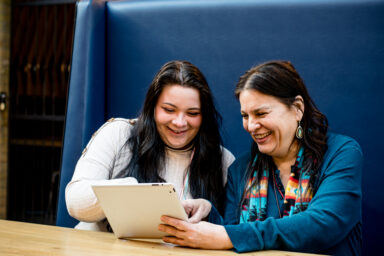
Living with a chronic disease like arthritis can sometimes make it difficult to experience joy and happiness, especially on days where pain levels are high. Research has found that happiness can help to reduce the intensity of pain, amount that pain disrupts daily activities, and distress related to pain fluctuations among people with arthritis.
It’s important to seek out moments of joy, and allow yourself to experience that joy, particularly when you are going through a hard time. Here are some ideas that may help you increase your feelings of joy:
- Watch a funny movie, TV show, or online video: Laughter releases a mix of neurotransmitters, which are chemical messengers that help your brain communicate with your body, including dopamine, serotonin, endorphins, and oxytocin. These cause feelings of pleasure, mood stability, pain relief, and connection with those around you.
- Pay attention to the good: An activity like this one from the Greater Good Science Center can help you keep an eye out for the positive parts of your day.
- Get involved in your community, in person or online: Sometimes getting involved in activities that provide a larger sense of purpose can shift your focus elsewhere and provide a sense of satisfaction. Make sure to listen to your body and consider your accessibility needs before choosing how to engage in your community.
- Try something new: Learning about a new topic or trying a new activity can provide a sense of joy and accomplishment.
- Make time to do things you enjoy: Engaging in your hobbies can also help you feel happy and fulfilled.
- Ask yourself: “Do I regularly ignore, diminish, or discount positive experiences in favour of focusing on unhelpful beliefs or unpleasant experiences?” This is often referred to as the “Yes, but…” trap.
Cultural Healing Practices
 Culture plays a role in how people think about mental health and how they choose to seek help, and it also holds an important role in healing and coping with mental health challenges. Cultures around the world have developed their own methods for maintaining wellbeing. For example, Traditional Chinese Medicine (TCM) takes a holistic approach to healing and wellness and offers practices that can support mental health. Learning more about and participating in your culture(s) can be an important tool for supporting your mental health, as it can help you feel connected to your communities and ancestors and might provide practices that you can incorporate into your daily life.
Utilizing traditional healing practices can be incredibly important for First Nations, Inuit, and Métis people. Indigenous perspectives on health are holistic and carry thousands of years of wisdom and experience, recognizing spiritual, mental, emotional, and physical health as equally important aspects of one’s overall wellbeing. Despite the ongoing effects of colonization, many of these methods are still practiced today, and are actively being strengthened and cultivated by communities across Turtle Island/North America.
Many Indigenous cultures practice teachings associated with the medicine wheel to find balance. Some people find it beneficial to build a medicine bundle as they move through their wellness journey. This can include spending time on the land engaging in traditional activities; participating in ceremony; meeting with an Elder, Knowledge Keeper, Medicine Person, or Traditional Teacher; connecting with traditional medicines; and checking in with friends, family, and other trusted community members.
You can explore these resources developed by Indspire and the Margaret & Wallace McCain Centre for Child, Youth & Family Mental Health at the Centre for Addiction and Mental Health (CAMH) for more information:
Lifestyle Adjustments
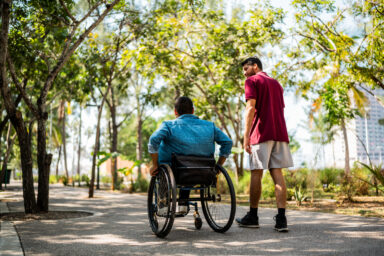
Your daily routines can also have a big impact on your mental health and sense of wellbeing. Check in with your habits related to food, physical activity, and sleep and see if you can make any small adjustments to support your wellbeing, remembering that a series of small changes add up to meaningful benefits. To get started, it might help to set a manageable goal (like trying out one new recipe per month or going for a weekly walk) or connecting with a loved one for support and accountability.
Nutrition plays an important role not just in physical health, but in mental wellbeing, too. Eating regular meals with a balance of nutrients can help support brain function, energy, and mood. Specific nutrients in food can also positively or negatively impact your mental health: low intake of carbohydrates can reduce serotonin, a chemical that helps regulate mood, and inadequate intake of omega-3 fats, iron, vitamin B12, or folate may increase the risk of depression or fatigue. Anti-inflammatory ways of eating, such as the Mediterranean diet, can also contribute to overall wellbeing. For more information about food and arthritis (including a selection of arthritis-friendly recipes), visit our Eating Well with Arthritis resource.
Physical activity can be a great way to reduce stress and improve your mental health. Arthritis symptoms like pain, stiffness, and swelling can make it difficult to move, but even a little bit of activity can make a difference. Consider what activities you enjoy doing – it’s much easier to get moving if it’s something you like to do. If you enjoy being outdoors, a nature walk or swim in the lake may be a good option. Or if you prefer to exercise in a group, a yoga class could be a nice way to start. To learn more about staying active with arthritis (including a curated list of our physical activity and exercise videos), visit our Physical Activity Guide.
Getting enough quality sleep is necessary for good overall physical and mental health and can help you feel more able to deal with stress. Sleep disturbances and mental health conditions have a reciprocal relationship, with one sometimes causing the other. Arthritis symptoms and some medications can also make it difficult for you to fall asleep or stay asleep throughout the night. A consistent bedtime routine can help your mind and body recognize when it’s time to go to sleep – try limiting screen use an hour before bed, going to bed around the same time every night, incorporating relaxing activities like reading or gentle stretching. It might also help to refrain from engaging in activities other than sleep and intimacy in bed, to help your body and mind associate your bed with sleep. Explore our resources on sleep for more information:
Contributors
This mental health resource was developed and last reviewed in March 2026 with expert advice from:
Dr. Joshua A. Rash, PhD, RPsych (NL), R.D.Psych. (SK)
Memorial University of Newfoundland; University of Saskatchewan
Marg Smit-Vandezande, MSW, RSW
Arthritis Rehabilitation and Education Program, Arthritis Society Canada
Nikolas Harris, MSW, RSW
Senior Manager, Mission, Arthritis Society Canada
- Mental health. World Health Organization. https://www.who.int/health-topics/mental-health.
- Aaron RV, Ravyts SG, Carnahan ND, et al. Prevalence of Depression and Anxiety Among Adults With Chronic Pain: A Systematic Review and Meta-Analysis. JAMA Netw Open. 2025;8(3):e250268. Published 2025 Mar 3. doi:10.1001/jamanetworkopen.2025.0268. https://pubmed.ncbi.nlm.nih.gov/40053352/.
- The Difference Between Mental Health and Mental Illness. HelpStartsHere. February 18, 2026. https://helpstartshere.gov.bc.ca/blog/difference-between-mental-health-and-mental-illness.
- Positive Mental Health and Well-Being. Canadian Mental Health Association Ontario. https://ontario.cmha.ca/documents/positive-mental-health-and-well-being/.
- Keyes CL. The mental health continuum: from languishing to flourishing in life. J Health Soc Behav. 2002;43(2):207-222. https://pubmed.ncbi.nlm.nih.gov/12096700/.
- Stigma. HelpStartsHere. May 23, 2023. https://helpstartshere.gov.bc.ca/wellbeing/social/stigma.
- Thornicroft G, Sunkel C, Alikhon Aliev A, et al. The Lancet Commission on ending stigma and discrimination in mental health. Lancet. 2022;400(10361):1438-1480. doi:10.1016/S0140-6736(22)01470-2. https://www.thelancet.com/journals/lancet/article/PIIS0140-6736(22)01470-2/abstract.
- Addressing Mental Health Stigma in Diverse Cultural Communities. ConnexOntario. January 7, 2025. https://connexontario.ca/blog/mental-health-stigma-diverse-cultures/.
- Understanding Mental Health Care For People With Arthritis. Arthritis Research Canada. https://www.arthritisresearch.ca/mental-health-care-highlight/.
- Goel N, Wallace EB, Lindsay C. Hot Topics: Depression in Individuals With Psoriasis and Psoriatic Arthritis. J Rheumatol. 2024;51(Suppl 2):43-50. Published 2024 Oct 1. doi:10.3899/jrheum.2024-0362. https://pubmed.ncbi.nlm.nih.gov/39009389/.
- Wang ST, Ni GX. Depression in Osteoarthritis: Current Understanding. Neuropsychiatr Dis Treat. 2022;18:375-389. Published 2022 Feb 22. doi:10.2147/NDT.S346183. https://pmc.ncbi.nlm.nih.gov/articles/PMC8883119/.
- Stubbs B, Aluko Y, Myint PK, Smith TO. Prevalence of depressive symptoms and anxiety in osteoarthritis: a systematic review and meta-analysis. Age Ageing. 2016;45(2):228-235. doi:10.1093/ageing/afw001. https://pubmed.ncbi.nlm.nih.gov/26795974/.
- Sharma A, Kudesia P, Shi Q, Gandhi R. Anxiety and depression in patients with osteoarthritis: impact and management challenges. Open Access Rheumatol. 2016;8:103-113. Published 2016 Oct 31. doi:10.2147/OARRR.S93516. https://pmc.ncbi.nlm.nih.gov/articles/PMC5098683/.
- Murphy LB, Sacks JJ, Brady TJ, Hootman JM, Chapman DP. Anxiety and depression among US adults with arthritis: prevalence and correlates. Arthritis Care Res (Hoboken). 2012;64(7):968-976. doi:10.1002/acr.21685. https://pubmed.ncbi.nlm.nih.gov/22550055/.
- Staying Healthy with Arthritis: Body AND Mind. Johns Hopkins Arthritis Center. August 15, 2012. https://www.hopkinsarthritis.org/arthritis-news/staying-healthy-with-arthritis-body-and-mind/
- Arthritis & Mental Health: It’s Complicated. Arthritis Research Canada. https://www.arthritisresearch.ca/understanding-rheumatoid-arthritis-and-mental-health/.
- Howren A, Sayre EC, Avina-Zubieta JA, et al. Do individuals with inflammatory arthritis receive minimally adequate treatment for incident depression and anxiety: A population-based study. Arthritis Res Ther. 2025;27(1):13. Published 2025 Jan 21. doi:10.1186/s13075-024-03466-8. https://pubmed.ncbi.nlm.nih.gov/39838484/.
- Patten SB, Williams JVA, Lavorato DH, et al. Patterns of association of chronic medical conditions and major depression. Epidemiol Psychiatr Sci. 2018;27(1):42-50. doi:10.1017/S204579601600072X. https://pubmed.ncbi.nlm.nih.gov/27784343/
- Berk M, Köhler-Forsberg O, Turner M, et al. Comorbidity between major depressive disorder and physical diseases: a comprehensive review of epidemiology, mechanisms and management. World Psychiatry. 2023;22(3):366-387. doi:10.1002/wps.21110. https://pubmed.ncbi.nlm.nih.gov/37713568/.
- Manning-Bennett AT, Hopkins AM, Sorich MJ, et al. The association of depression and anxiety with treatment outcomes in patients with rheumatoid arthritis – a pooled analysis of five randomised controlled trials. Ther Adv Musculoskelet Dis. 2022;14:1759720X221111613. Published 2022 Jul 22. doi:10.1177/1759720X221111613. https://pmc.ncbi.nlm.nih.gov/articles/PMC9310212/
- Snoeck Henkemans SVJ, Vis M, Koc GH, et al. Association between depression and anxiety and inability to achieve remission in rheumatoid arthritis and psoriatic arthritis. Rheumatology (Oxford). 2025;64(5):2411-2421. doi:10.1093/rheumatology/keae621. https://pmc.ncbi.nlm.nih.gov/articles/PMC12048054/.
- Salas-González J, Heredia-Rizo AM, Fricke-Comellas H, Chimenti RL, Casuso-Holgado MJ. Patterns of pain perception in individuals with anxiety or depressive disorders: A systematic review and meta-analysis of experimental pain research. J Pain. 2025;35:105530. doi:10.1016/j.jpain.2025.105530. https://www.jpain.org/article/S1526-5900(25)00757-6/fulltext.
- “Psychology Works” Fact Sheet: Arthritis. Canadian Psychological Association. July 25, 2019. https://cpa.ca/psychology-works-fact-sheet-arthritis/.
- Mental Illness and Addiction: Facts and Statistics. Canadian Mental Health Association. https://www.camh.ca/en/driving-change/the-crisis-is-real/mental-health-statistics.
- Li L, Merchant M, Gordon S, et al. High Rates of Symptoms of Major Depressive Disorder and Panic Disorder in a Canadian Sample of Adolescents With Juvenile Idiopathic Arthritis. J Rheumatol. 2023;50(6):804-808. doi:10.3899/jrheum.220067. https://pubmed.ncbi.nlm.nih.gov/36521911/.
- Chen C, Bailey C, Baikie G, Dalziel K, Hua X. Parents of children with disability: Mental health outcomes and utilization of mental health services. Disabil Health J. 2023;16(4):101506. doi:10.1016/j.dhjo.2023.101506. https://www.sciencedirect.com/science/article/pii/S193665742300078X.
- Caring in Canada: Survey insights from caregivers and care providers across Canada. Canadian Centre for Caregiving Excellence. https://canadiancaregiving.org/caring-in-canada/.
- Social Isolation and Loneliness – Older Adults and Care Partners. Canadian Coalition for Seniors’ Mental Health. https://ccsmh.ca/areas-of-focus/social-isolation-and-loneliness/older-adults-and-care-partners/.
- Sherman DW, Alfano AR, Alfonso F, et al. A Systematic Review of the Relationship between Social Isolation and Physical Health in Adults. Healthcare (Basel). 2024;12(11):1135. Published 2024 Jun 1. doi:10.3390/healthcare12111135. https://pmc.ncbi.nlm.nih.gov/articles/PMC11171827/.
- Morina N, Kip A, Hoppen TH, Priebe S, Meyer T. Potential impact of physical distancing on physical and mental health: a rapid narrative umbrella review of meta-analyses on the link between social connection and health. BMJ Open. 2021;11(3):e042335. Published 2021 Mar 18. doi:10.1136/bmjopen-2020-042335. https://pmc.ncbi.nlm.nih.gov/articles/PMC7978290/.
- Office of the Surgeon General (OSG). Our Epidemic of Loneliness and Isolation: The U.S. Surgeon General’s Advisory on the Healing Effects of Social Connection and Community. Washington (DC): US Department of Health and Human Services; 2023. https://www.ncbi.nlm.nih.gov/books/NBK595227/pdf/Bookshelf_NBK595227.pdf.
- Raufi S, Refol J, Frost A, Card K. How can we promote disability inclusion? Social Connections Guideline Evidence Brief. Published 2024 Feb 27. https://www.socialconnectionguidelines.org/en/evidence-briefs/how-can-we-promote-disability-inclusion.
- Social Connection Guidelines. https://www.socialconnectionguidelines.org/en.
- Coping with a diagnosis of chronic illness. American Psychological Association. August 1, 2013. https://www.apa.org/topics/chronic-illness/coping-diagnosis.
- Stress. Canadian Mental Health Association. February 28, 2016. https://cmha.ca/brochure/stress/.
- Stress. Mental Health Foundation. https://www.mentalhealth.org.uk/explore-mental-health/a-z-topics/stress.
- Mental Illnesses. Canadian Mental Health Association. February 28, 2016. https://cmha.ca/brochure/mental-illnesses/.
- Anxiety Disorders. Canadian Mental Health Association. February 28, 2016. https://cmha.ca/brochure/anxiety-disorders/
- Depression and Bipolar Disorder. Canadian Mental Health Association. December 18, 2015. https://cmha.ca/brochure/depression-and-bipolar-disorder/.
- Wilson KG, Heenan A, Kowal J, Henderson PR, McWilliams LA, Castillo D. Testing the Interpersonal Theory of Suicide in Chronic Pain. Clin J Pain. 2017;33(8):699-706. doi:10.1097/AJP.0000000000000451. https://pubmed.ncbi.nlm.nih.gov/27768608/.
- Marques A, Santos E, Nikiphorou E, Bosworth A, Carmona L. Effectiveness of self-management interventions in inflammatory arthritis: a systematic review informing the 2021 EULAR recommendations for the implementation of self-management strategies in patients with inflammatory arthritis. RMD Open. 2021;7(2):e001647. doi:10.1136/rmdopen-2021-001647. https://pmc.ncbi.nlm.nih.gov/articles/PMC8166594/.
- Exercising to relax. Harvard Health Publishing. July 7, 2020. https://www.health.harvard.edu/healthy-aging-and-longevity/exercising-to-relax.
- Pluess M, Conrad A, Wilhelm FH. Muscle tension in generalized anxiety disorder: a critical review of the literature. J Anxiety Disord. 2009;23(1):1-11. doi:10.1016/j.janxdis.2008.03.016. https://pubmed.ncbi.nlm.nih.gov/18472245/.
- Positive Self-Talk. ConnexOntario. April 4, 2022. https://connexontario.ca/blog/positive-self-talk/.
- Self-Talk & the Impact it has on our Lives. Trauma Research UK. https://traumaresearchuk.org/self-talk-and-the-impact-it-has-on-our-life/.
- Zautra AJ, Johnson LM, Davis MC. Positive affect as a source of resilience for women in chronic pain. J Consult Clin Psychol. 2005;73(2):212-220. doi:10.1037/0022-006X.73.2.212. https://pmc.ncbi.nlm.nih.gov/articles/PMC2593933/.
- Strand EB, Zautra AJ, Thoresen M, Ødegård S, Uhlig T, Finset A. Positive affect as a factor of resilience in the pain-negative affect relationship in patients with rheumatoid arthritis. J Psychosom Res. 2006;60(5):477-484. doi:10.1016/j.jpsychores.2005.08.010. https://pubmed.ncbi.nlm.nih.gov/16650588/.
- Müller R, Terrill AL, Jensen MP, Molton IR, Ravesloot C, Ipsen C. Happiness, Pain Intensity, Pain Interference, and Distress in Individuals with Physical Disabilities. Am J Phys Med Rehabil. 2015;94(12):1041-1051. doi:10.1097/PHM.0000000000000294. https://pubmed.ncbi.nlm.nih.gov/25802959/.
- Zautra A, Smith B, Affleck G, Tennen H. Examinations of chronic pain and affect relationships: applications of a dynamic model of affect. J Consult Clin Psychol. 2001;69(5):786-795. doi:10.1037//0022-006x.69.5.786. https://pubmed.ncbi.nlm.nih.gov/11680555/.
- How can you find joy (or at least peace) during difficult times? Harvard Health Publishing. October 17, 2022. https://www.health.harvard.edu/blog/how-can-you-find-joy-or-at-least-peace-during-difficult-times-202210062826.
- Building your medicine bundle: Understanding your mental health journey. Indspire and the Margaret and Wallace McCain Centre for Child, Youth & Family Mental Health at the Centre for Addictions and Mental Health. 2021. https://indspire.ca/wp-content/uploads/2021/02/Indspire_CAMH_TipSheet-1.pdf.
- Journeying along the river: Reaching out for support. Indspire and the Margaret and Wallace McCain Centre for Child, Youth & Family Mental Health at the Centre for Addictions and Mental Health. 2021. https://indspire.ca/wp-content/uploads/2021/02/Indspire_CAMH_TipSheet-2-8.5-x20-Online-Version.pdf
- Traditional Methods of Healing. Teladoc Health Canada, Inc. https://library.teladochealth.ca/hc/en-ca/articles/38530701758995-Traditional-Methods-of-Healing.
- Land-Based Teachings: Indigenous Approaches to Healing. British Columbia Ministry of Health. https://www2.gov.bc.ca/assets/gov/health/accessing-health-care/assisted-living-registry/land_based_teachings_and_indigenous_approaches_to_healing.pdf.
- Culturally-Based Practices. Mental Health America. https://mhanational.org/resources/culturally-based-practices/
- Sleep and Mental Health – What’s the Connection? Mental Health Commission of Canada. 2025. https://mentalhealthcommission.ca/resource/sleep-and-mental-health-whats-the-connection/.
- Faber SC, Osman M, Williams MT. Access to mental health care in Canada. International Journal of Mental Health. 2023;52(3):312-334. doi:10.1080/00207411.2023.2218586. https://www.tandfonline.com/doi/full/10.1080/00207411.2023.2218586.
- Arthritis and Mental Health. JointHealth™ Education. https://education.jointhealth.org/jointhealth-education/course-6-mental-health/.
- Antidepressant Medications. Centre for Addiction and Mental Health. https://www.camh.ca/en/health-info/mental-illness-and-addiction-index/antidepressant-medications.
- Anti-anxiety Medications (Benzodiazepines). Centre for Addiction and Mental Health. https://www.camh.ca/en/health-info/mental-illness-and-addiction-index/anti-anxiety-medications-benzodiazepines.
- Everything You Need to Know About Psychotherapy. College of Registered Psychotherapists of Ontario. https://crpo.ca/resources/what-to-know-about-psychotherapy/.
- Cognitive Behavioural Therapy. Centre for Addiction and Mental Health. https://www.camh.ca/en/health-info/mental-illness-and-addiction-index/cognitive-behavioural-therapy.
- Cognitive Behavioural Therapy for Pain Management. HealthLinkBC. October 20, 2022. https://www.healthlinkbc.ca/healthwise/cognitive-behavioral-therapy-pain-management.
- Psychotherapy. Canadian Mental Health Association. December 5, 2018. https://cmha.ca/brochure/psychotherapy/.