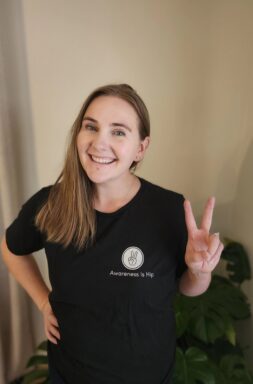
 Leah Saik imagined the early months of motherhood in picture-perfect detail. During both of her pregnancies, she envisioned dressing her babies in thoughtfully chosen outfits, playing freely and, alongside her husband, sharing smiles with other new parents at the park.
When Zoe and Lincoln were born with developmental dysplasia of the hip (DDH) – a condition where the hip socket doesn’t form properly, often leading to osteoarthritis – those expectations quickly unraveled. The adorable clothes she had selected didn’t fit over the corrective harness each baby had to wear for 23 hours per day over 12 weeks. The harnesses shaped everything, from how her children moved and played to how they slept and could be held. Instead of friendly exchanges with other parents, Leah and her husband felt the weight of curious, sometimes intrusive, glances.
“I was quickly awakened to a drastically different reality than the one I expected. There were feelings of isolation for my husband and me, and our kids were very uncomfortable because their clothes weren’t made to accommodate harnesses,” Leah says. “I was shocked to learn that not a single North American supplier made clothing for babies in harnesses.”
In response, Leah stitched together a solution. She launched Little Hippy Co. in 2024, North America’s first baby apparel line designed specifically for infants being treated for DDH with a harness, brace or cast.
From stubbornness to a solution
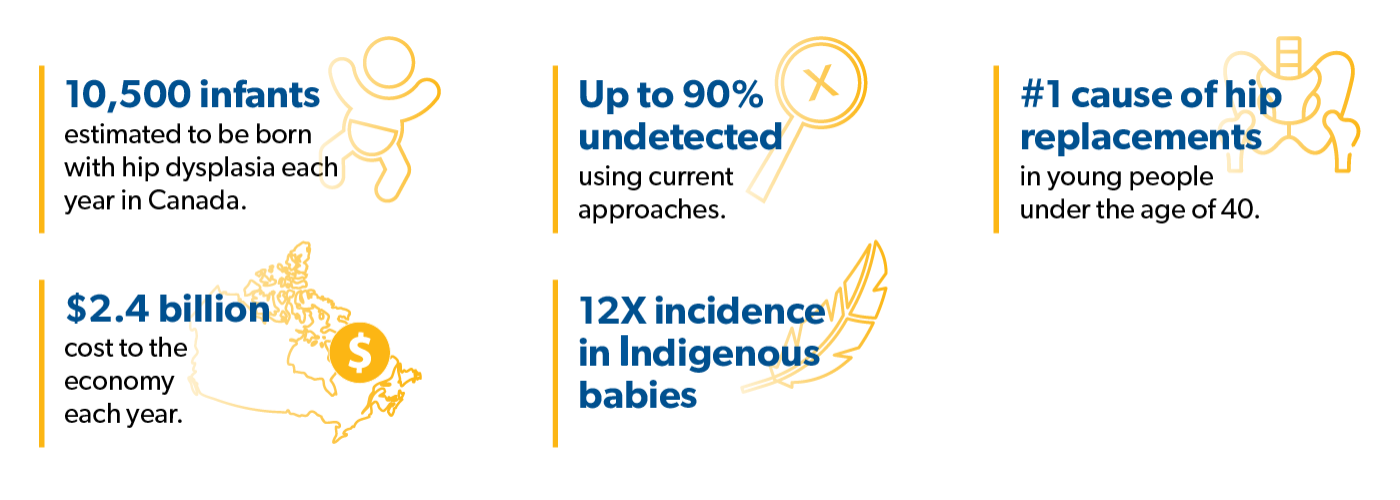
Every year in Canada, 10,500 babies are born with DDH, which can cause instability ranging from subtle looseness in the hips to complete dislocation. When caught early, a harness, brace or cast can be worn to correct the condition. Left untreated, it can lead to early-onset osteoarthritis with long-term, debilitating side effects. Invasive surgery, chronic pain and compromised quality of life are common. Up to 90% of DDH cases are missed with current medical approaches.
Thankfully, Zoe and Lincoln’s DDH was detected early through ultrasound, but finding clothes to fit around their harnesses was anything but simple. Leah discovered the only options were overseas, with steep shipping costs. That realization was the spark for Little Hippy Co.
“The idea was born out of a need I saw and a stubbornness I have. Once I learned the statistics on DDH, I couldn’t believe we didn’t have clothing options here in North America,” says Leah, who was diagnosed with DDH herself as a baby, received no formal treatment and in December 2025 was diagnosed with early-onset osteoarthritis of the hip.
Another driving factor hit close to home: “We’re an Indigenous family, and discovering that Indigenous infants are 12 times more likely to have DDH really stuck with me.”
Designing for a difference
Little Hippy Co. pants and pajama onesies feature wide-set legs, extra snaps and roomier chests. These details make dressing and diaper changes easier. The soft, bamboo-based fabrics are breathable to prevent overheating and flexible to grow with babies during their treatment.
Leah, whose background is in construction and project management and who had no formal fashion experience, calls feedback from families who have purchased pieces from the Canadian-made collection “amazing.” Little Hippy Co. has also led to an unexpected foray into advocacy and awareness.
Through her business, Leah has connected with others in the DDH community, including Dr. Jacob Jaremko at the University of Alberta, who is leading the NAPS (Newborn Arthritis Prevention Screening) Project with Arthritis Society Canada. The initiative uses artificial intelligence and 3D imaging in handheld ultrasound devices to detect DDH quickly, affordably and accurately. Rural, remote and Indigenous communities are a focus before potential nationwide expansion.
Leah is a strong supporter of the project: “It’s so simple to do the scan and know right away. If it’s a yes, then treat it early with a harness. It’s a pain, but it’s not a hip replacement later in life.”
A legacy stitched with love
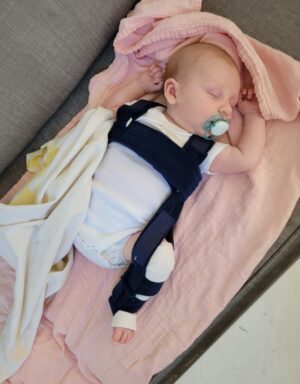 As Leah reflects on her family’s DDH experience and the road to Little Hippy Co., she vividly recalls one night with her son. Both were exhausted and uncomfortable. “He was in his harness, and I remember thinking, there’s no amount of money I wouldn’t throw at this situation to get him some relief – and get us both some rest,” she says.
Little Hippy Co. didn’t exist then – but it does now, for every parent impacted by DDH in search of comfort, connection and understanding.
“My family has been deeply affected by DDH, so it’s meaningful to contribute to a solution. Even if we were only helping one family feel a little less alone in the journey, that would be a win,” Leah says.