What is psoriatic arthritis?
 Psoriatic arthritis (PsA) is a type of inflammatory arthritis that usually appears in people with a skin disease called psoriasis. Up to a third of people with psoriasis have psoriatic arthritis. Psoriatic arthritis affects both males and females equally, and usually appears between the ages of 30 and 50 years.
Psoriatic arthritis affects joints and entheses (An enthesis is where tendons and ligaments attach to bone. Entheses is plural), causing inflammation, pain, and possible joint damage. There is no cure for psoriatic arthritis, but when you are diagnosed early and start the right treatment, you can take control of your disease and avoid severe damage to your joints. Most people with psoriatic arthritis can lead active and productive lives with the help of the right treatment and self-management techniques.
People with psoriatic arthritis usually already have a diagnosis or symptoms of psoriasis. Psoriasis is an autoimmune disease that occurs when the immune system receives messages to “attack” the skin. This results in red, inflamed patches of skin that are covered with a scale (also called plaque). Psoriasis can involve only a few small patches of skin, or much larger areas of skin. Psoriasis can also develop in finger and toe nails. In most people, psoriasis tends to be mild, and some people do not even realize they have it at all. For people who develop symptoms of psoriatic arthritis, they typically appear after symptoms of psoriasis, but not always.
* This illustration was created by Chidiebere Ibe and shared with us for use by Illustrate Change, a Johnson & Johnson initiative to increase representation in medical art and illustration. ©2022.
Treatment
Medication

Arthritis medications are designed to control the disease, slow its progression, help manage pain, and improve physical function and quality of life. There is a wide range of options—with new medications being developed and tested in clinical trials. Understanding all possible treatments is not easy.
These medications can be very complex, so if you are not sure how your medication works or have more questions don’t be afraid to ask! Your healthcare team wants to make sure you understand how your medication works, and that you feel comfortable taking it. Pharmacists are also a great resource for any questions you may have about your medications or to help clarify how to take your medication.
Common medications used to treat symptoms of psoriatic arthritis:
Arthritis Society Canada has developed a comprehensive expert guide that explains detailed information about medications used to treat psoriatic arthritis and other types of arthritis.
Arthritis Medications – A Reference Guide
Skin care
Properly caring for your skin will help you manage your symptoms. If you have severe psoriasis, you should also see a skin doctor (dermatologist) who can help you with a treatment plan to care for your skin.
Many types of psoriasis benefit from exposure to moderate amounts of sunlight, however some types of psoriasis may be worsened by sun exposure. It is important to talk with your doctor or dermatologist about how sun exposure may affect you. They will also be able to guide you on how to avoid sunburns.
Corticosteroids
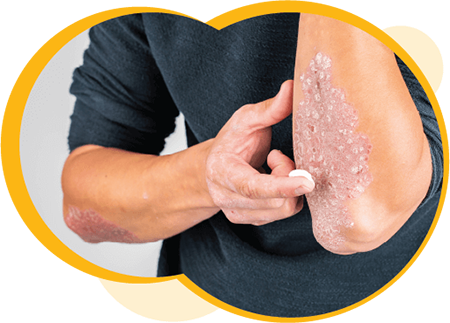 A dermatologist (skin doctor) may also try other forms of treatment to help manage skin plaques or scales while waiting for DMARDs or other combination therapies to start working. These treatments may include corticosteroids.
Corticosteroids can be applied in a topical format (creams, gels, or ointments) directly to the affected area of skin. A corticosteroid can help reduce inflammation, alleviate itchiness, slow the hyper-production of skin cells causing plaques, and help skin to shed to prevent scale build up.
There are different strengths and classes of corticosteroids that can be used to help treat symptoms of psoriasis. Due to potential side effects, it is important to not use them more often than directed by your doctor, and to only use on the areas prescribed. Different strengths and concentrations of corticosteroids can cause negative side effects in some areas of the body including acne, skin thinning, skin tearing and bruising, among others.
Surgery
Surgery is something that you and your doctor may consider if one of your joints becomes badly damaged and is no longer functioning. Some people with severe, advanced psoriatic arthritis who have not responded to conservative pain management for their damaged joints may benefit from surgery. Benefits include less pain and better movement and function. It is important to remember that surgery is not a treatment for the inflammation of psoriatic arthritis.
Complementary articles:
Symptoms and Diagnosis
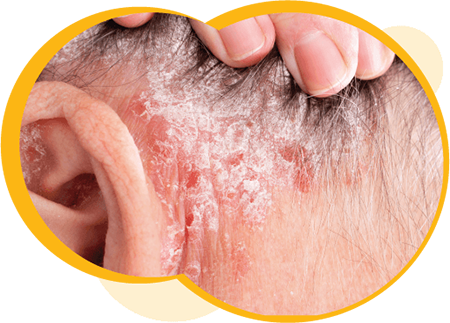 Psoriatic arthritis is both an autoimmune disease and a form of inflammatory arthritis. The immune systems of people with psoriatic arthritis attack the joints, in addition to the skin. This can cause the joints to swell and become red and inflamed (warm to touch). It may also cause back and neck pain.
In most people, psoriatic arthritis starts after the onset of psoriasis, but having psoriasis does not always mean you will have psoriatic arthritis. In fact, most people with psoriasis will never develop psoriatic arthritis. Up to a third (approximately 30%) of people with psoriasis will develop psoriatic arthritis in their lifetime and symptoms will usually begin slowly, spreading to other joints over a few weeks to a few months. Less commonly, it can develop quickly and be severe.
Psoriatic arthritis is an unusual type of arthritis because it can look very different from person to person, and sometimes symptoms of arthritis may not develop until ten or more years after developing psoriasis.
Additional risk factors and genetic links associated with a greater chance of developing psoriatic arthritis are explored below.
What are the risk factors for psoriatic arthritis?
No one completely knows what causes psoriatic arthritis, but genetics play a big role. If someone in your family has psoriasis or psoriatic arthritis, there is a greater chance that you could develop it.
Psoriasis
Having psoriasis increases the chance that you may later develop psoriatic arthritis, though most people with psoriasis do not develop psoriatic arthritis. Up to a third of people with psoriasis have psoriatic arthritis, compared to less than 1% of adults in the general Canadian population.
Genetics/ Family history
People who develop psoriatic arthritis can have genes that predispose, or give them more potential, to have the disease, but those genes are not always triggered to develop psoriasis or psoriatic arthritis. Researchers are still working to understand how genetics play a role in who develops psoriatic arthritis.
Sex
Psoriatic arthritis affects males and females in equal numbers. Its prevalence in people who are intersex or differences across multiple genders is unknown.
Hormones
Some hormonal changes may be linked to psoriatic arthritis or psoriasis flares. Hormone changes during and after pregnancy, during breast or chest feeding, throughout the menstrual cycle, and even oral contraception use may relieve or trigger psoriatic arthritis symptoms depending on each person’s experience with the disease.
There is currently no clear indication that hormone replacement therapy (HRT) has an impact on symptoms or likelihood of developing psoriatic arthritis, though more research is needed in this area.
Age
Psoriatic arthritis can affect people of any age, but it is more commonly diagnosed in people between the ages of 30-50 years.
Environment
Psoriatic arthritis is not contagious, though symptoms of psoriatic arthritis may appear for the first time after having an infection. Other environmental factors such as stress or physical injury could also lead to the onset of symptoms.
Smoking
Cigarette smoking can increase the risk of developing psoriatic arthritis among the general population. Smoking is the strongest environmental risk for the development of psoriatic arthritis and for having a more severe form of joint pain and stiffness.
What are the symptoms or possible early signs of psoriatic arthritis?
Joint pain and stiffness
Many people who develop psoriatic arthritis already have symptoms or a diagnosis of psoriasis. If any new or unexplained joint pain develops, this may be an early sign of psoriatic arthritis. Sometimes arthritis occurs before the skin rash from psoriasis is visible. If any of the following symptoms last for more than two weeks, you should see your doctor:
- You start to feel unusual pain and stiffness in a joint(s), which may include new back pain and stiffness.
- The pain and stiffness is worse in the morning, typically lasting an hour or more than before the joints loosen up and start feeling better.
- The pain and stiffness can be with you (to some degree) most of the day, even causing discomfort while you try to sleep at night.
- You feel more tired than usual, without any other cause.
Enthesitis
The place where a tendon or ligament attaches to bone is called an enthesis (plural: entheses). There are over 100 entheses in your body with many ligaments and tendons attaching to bones. When these areas become swollen or inflamed, it is called enthesitis. People with psoriatic arthritis may also experience pain in the tendons or ligaments due to inflammation caused by enthesitis. This can be experienced in addition to painful joints.
Some of the more common spots for enthesitis are on the back of the heels, underneath the heel, on the sides of the elbows, and on the outside of the hips.
Finger or toe nail changes
Psoriasis can cause changes in nails, such as pitting, or separation from the nail bed. People with nail psoriasis are more likely to develop psoriatic arthritis.
Nail psoriasis may be a form of enthesitis. The presence of nail psoriasis may indicate the presence of enthesitis, which may progress to psoriatic arthritis.
Dactylitis
In some people, swelling of the entire toe or finger can occur. This is called dactylitis or ‘sausage’ digit(s).
Skin
Psoriasis: The most common form of psoriasis is called plaque psoriasis, and can cause skin to have raised, inflamed, scaly patches of skin that may be painful or itchy. In people with darker or more pigmented skin (i.e., black, brown) plaques may be thicker, darker, and have a purplish, grey or brown colour. For people with lighter pigmented skin (i.e., white), the plaques may appear red, or have a silvery white scale of built-up dead skin cells.
Eyes
 Uveitis is an inflammatory condition that affects the uvea (middle layer) of the eye. It can cause pain, redness, and inflammation in one or both eyes. It can also cause blurred or distorted vision and may cause permanent damage or vision loss if not treated.
Uveitis affects about 7% of people with psoriatic arthritis. It is important to monitor your symptoms and let your doctor or healthcare team know if you experience pain in or behind your eyes, have blurry vision, become light sensitive, or have other vision changes with no other known cause. Catching symptoms early is important to minimizing changes to your vision.
A regular check up from an eye doctor (optometrist or ophthalmologist) may help catch early symptoms of eye inflammation and is an important part of maintaining eye health.
Patterns
There are five general patterns of psoriatic arthritis:
- Asymmetric psoriatic arthritis affects one to four joints on different sides of the body.
- Symmetric psoriatic arthritis involves many more joints and looks very much like rheumatoid arthritis (RA).
- Distal psoriatic arthritis involves the end joints of the fingers closest to the nails.
- Spinal psoriatic arthritis involves the joints of the spine and the sacroiliac joints that link the spine to the pelvis.
- Destructive psoriatic arthritis is an uncommon but severe, painful, deforming type of arthritis, also known as arthritis mutilans.
The pattern of your psoriatic arthritis may change over time.
How is psoriatic arthritis diagnosed?
 A person with medium-light skin applying a topical cream to a patch of psoriasis on their forearm.There is no single test for psoriatic arthritis. However, if you have joint pain and stiffness together with psoriasis in your skin and/or nails, you may have psoriatic arthritis.
The symptoms of psoriatic arthritis can be similar to other forms of inflammatory arthritis. To rule out other forms of arthritis, your doctor will use a physical examination, blood tests and X-rays or other forms of imaging such as ultrasound or MRI to help confirm a diagnosis. Sometimes psoriatic arthritis starts after an injury to a joint and can be misdiagnosed.
While there is currently no cure for psoriatic arthritis, making the right diagnosis is very important because there are many treatment options to manage the symptoms of psoriatic arthritis and its progression.
How common is psoriatic arthritis?
About 0.2% of adults living in Canada have psoriatic arthritis, but the exact numbers are unknown.
- Psoriatic arthritis is diagnosed in about 30% of patients attending psoriasis clinics.
- Psoriatic arthritis is also detected in about 15% of people with psoriasis seen by a family doctor.
- Psoriatic arthritis can develop at any age.
- Symptoms often develop after a “trigger” event.
A trigger event could be an unexpected source of stress, a viral infection, injury, or environmental cause. There may also be more than one trigger acting at one time that causes symptoms to first appear.
Arthritis Talks Webinars
Arthritis Talks webinars on the latest guidance direct from arthritis experts to help you get more out of life with inflammatory arthritis.
 |
 |
 |
| Living Well with Psoriatic Arthritis: What You Need to Know | Inflammatory Arthritis: What you need to know | Strategies to manage your emotional health |
| Rheumatologist Dr. Olga Ziouzima and pharmacist Alexandra Charlton discuss symptoms and treatment of psoriatic arthritis… | In this Arthritis Talks webinar, rheumatologist Dr. David Robinson zeroes in on what you really need to know about inflammatory… | Psychologist Dr. Susan Bartlett discusses emotional wellbeing, and strategies to manage emotional health with arthritis. |
| View More Webinars |
Contributors
This information was last updated January 2024, with expert advice from:
Vinod Chandran, MB BS MD DM PhD
Associate Professor of Medicine, Division of Rheumatology, University of Toronto
Staff Physician, Division of Rheumatology, University Health Network