Before considering surgery, there are a number of other treatment options available for osteoarthritis (OA), including physiotherapy, exercise and weight management, as well as medication. However, if you’ve exhausted other options and are still seeking relief, you may be wondering if surgery is right for you. This resource will help you talk to your doctor about when surgery might be appropriate as well as the risks and benefits involved.
Am I Ready for Joint Surgery?
If significant OA is present, choosing to have surgery is likely to depend on your level of pain and how restricted you are in your daily activities. Ask yourself:
-
- Do you need help to complete daily tasks because of your osteoarthritis?
- Does your pain keep you up at night despite using medication and other sleep aids?
- Has your pain gotten worse lately?
- Have you exhausted all other non-surgical treatment options?
- Is it too difficult to get up from a chair or climb stairs?
- Does your doctor say other treatment options won’t be effective?
- Do you find it difficult to deal with the side effects of your medication?
- Are you committed to the pre- and post-surgical therapies required?
If you answered “Yes” to all of the above questions, it might be time to talk to your doctor about surgery. If you answered “No” to any of the questions, surgery might still be an option, but there are other factors to consider.
When is Surgery Not Appropriate?
If your pain isn’t limiting your normal activities, if you can get relief from medications or therapy, or if you can still do things like walking and shopping, surgery may not be necessary. Surgery is also not appropriate for patients who want to return to high-impact sports such as running.
On the other hand, waiting until you’ve already lost a lot of your strength, flexibility, and ability to perform daily tasks can make it more difficult to return to your normal activities after surgery. “Surgery is best done when your pain is limiting, but not disabling and when your function is limited, but you are still capable of improvement” (”When is hip surgery necessary?” Sunnybrook Hospital, 2018).
Doctors may not recommend surgery for people who have:
- Poor general health
- Active infection or are at high risk of developing an infection (e.g. patients who are smokers, have uncontrolled diabetes, are immunocompromised, or who are very obese and have not attempted weight-loss)
- Severe muscle weakness that would make it difficult for muscles to support the new joint
What are the Potential Benefits and Risks?
Benefits can include:
- Reduced pain
- Improved ability to stand, walk and/or move
- Increased ability to do daily activities
- Return to low-impact recreational activities (e.g. swimming, cycling, golf)
- Joint could last a lifetime with proper weight management, joint protection and regular exercise/activity
Risks can include:
- Ongoing pain in the affected joint
- Premature wearing of the new joint and the need for a revision
- Post surgical complications including blood clots, infection, fracture, bleeding, nerve injury, limp, joint stiffness, wound healing problems
- Loosening of implant that makes revision surgery necessary
 If you have your surgery date booked, use this checklist to help ensure you’re ready in the months and weeks leading up to your surgery. If you’re waiting for your surgery confirmation, there’s still plenty you can do to be prepared when the day arrives.
 Once you’re ready to move ahead with surgery, there are a few things you should know about what to expect from your procedure. The process, potential complications and even what the surgeon does can differ based on the type of surgery you’re having. Read on to learn more about what’s involved in different types of surgery.
Traditional, Open Procedures vs. Minimally Invasive Surgery
In traditional, open joint surgery procedures, a surgeon will fully open up the area to be operated on to get a clear view of the joint. In minimally invasive surgery, the surgeon will make a smaller incision and use special tools to help them see what they are doing in the joint. Minimally invasive surgery may lead to quicker recovery times and reduce surgery-related pain but may not always be right for you. Your surgeon will discuss options based on your condition.
Surgery Processes
In some cases, surgery can be done as an outpatient procedure, without an overnight hospital stay. If there is a hospital stay involved, it is usually one or two days.
 |
Surgery can take 1 to 2 hours or more, depending on the affected area and type of surgery |
 |
An intravenous (IV) line will be inserted into a vein in your arm or hand to give you fluids and required medicine during surgery |
 |
You will receive an anaesthetic and/or sedative which will make you sleep through the surgery. |
 |
Your vital signs such as heart rate and blood pressure will be monitored to ensure surgery can proceed safely. |
Arthroplasty (Joint Replacement)
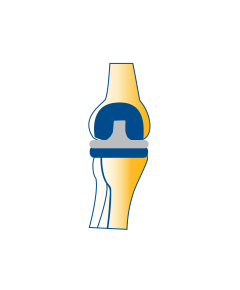
This is done when other treatments have not worked and joint function is limited. It involves surgery to resurface or replace the ends of bones in a damaged joint to create new joint surfaces. The artificial joint (prosthesis) is usually made of metal and plastic, which is fitted to the end of the bones in the affected joint to replace the worn-out joint surface. The prosthesis may be kept in place using bone cement or through a coating that encourages bone growth onto the implant. The joints most often replaced are the hip, knee, and shoulder. Other joints such as the elbow and ankle can also be replaced.
 |
An incision is made over the affected area. |
 |
The surgeon removes the damaged areas of bone and cartilage around the joint. |
 |
The joint surface is replaced with metal and plastic components. |
 |
The incision is closed and a dressing applied. |
Arthrodesis (Joint Fusion)
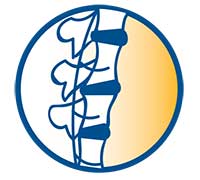
This procedure fuses two bones together in a damaged joint. The result is a joint that no longer moves, which reduces pain by eliminating movement between the damaged joint surfaces. Fusion procedures are most commonly used to treat arthritis of the spine, ankles, hands and feet.
|
An incision is made at the affected area. |
 |
The surgeon removes damaged cartilage and bone, removing the joint surfaces. |
 |
The bones on either end of the joint are fused together. Metal implants such as pins, plates and screws as well as bone grafts may be used to stabilize the bone ends to ensure healing. Pins are often later removed. |
|
The incision is closed and a dressing applied. |
Osteotomy
An osteotomy involves cutting and realigning a bone. This is done to correct certain deformities, especially around the hip and knee. By realigning the joint, abnormal forces in the joint can be reduced, slowing down the progression of arthritis. In most cases, osteotomies are done in active younger people who want to delay surgery to replace a hip or knee joint.
|
An incision is made at the affected area. |
 |
The surgeon cuts the affected bone. |
 |
The bone is realigned to correct the shape and reduce abnormal forces through the joint. |
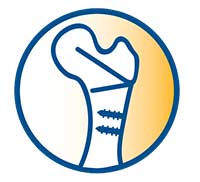 |
The bone is then secured using pins and/or plates and screws until the bone has healed in the new position. If needed, a bone graft (a small piece of bone) is added. |
|
The incision is closed and a dressing applied. |
Other procedures may be indicated in some cases and you should discuss the details with your surgeon.
Depending on the type of surgery, your immediate recovery may include:
|
Your IV remaining in for a period of time after surgery to deliver pain medicine and sometimes other medicines as needed |
 |
Measures taken to manage swelling, such as compression stockings (for hip and knee surgery) |
 |
Learning deep breathing exercises to prevent lung congestion |
 |
Learning how to move around safely after surgery and learning how to use a mobility aid, if required. You may also learn to do exercises that will help with your recovery (e.g. bending and straightening your leg after knee replacement surgery). |
|
Learning how to manage your pain safely after surgery. Adequate pain control means that you are able to look after yourself and do your usual daily tasks. In addition to medications, you will also use techniques such as icing and elevating the affected area to minimize pain. |
Using a variety of different techniques to manage pain will help you to avoid or minimize the need for strong opioid pain medications during recovery.
Complications
Any surgery comes with a risk of complications. This might be due to prior health issues, the anesthetic you receive, or the stress on your body from undergoing surgery. Here are a few things you can do to help prevent or diminish complications:
- Infection – infections in the skin around the wound or inside the affected joint are rare, but can be very serious when they occur. If you develop a serious infection, you may require additional surgery. You can do the following things to reduce your risk of infection:
- Be well-nourished (patients who are either very thin or who are very overweight are at increased risk of infection)
- Quit smoking (at least 6 weeks prior to the surgery date)
- If you are diabetic, ensure your blood sugar is well controlled (check with your family doctor if you are unsure)
- Take your pre-operative shower with chlorhexidine soap (prescribed by your surgeon or provided by your hospital)
- Listen to and follow the instructions provided to care for your wound after surgery.
- Anemia (lack of healthy red blood cells) – to reduce the risk of low hemoglobin levels when you lose blood during surgery, get your body in the best shape for surgery beforehand. Your hemoglobin level should be tested before surgery and if it is low, it should be addressed before surgery to reduce the risks associated with transfusion (receiving blood), which may increase risk of other complications. Your doctor may suggest taking an iron supplement before and/or after surgery. If your hemoglobin is very low, you may need to take other medications to build it up before surgery.
- Blood clots – these can develop after surgery, especially in people with other risk factors or who are inactive. Be sure to move frequently and perform activities that increase blood circulation. If you have joint replacement (hip or knee) surgery, you will need to take a medication to prevent blood clots for at least two weeks after surgery.
- Lung complications – fluid in the lungs or pneumonia could result from prolonged bed rest. Be sure to remember to take deep breaths regularly and get out of bed and move as soon as you can after surgery.
- Delirium – sometimes a period of confusion can occur after surgery. There are several causes for this, but one of the most common causes is the use of opioid medications for pain management. To help reduce the chance of delirium, minimize how much strong opioid pain medication you take. If you wear glasses or hearing aids, remember to use these so you can safely interact with your surroundings.
- Pain – opioids are powerful medications that may be used to manage your pain after surgery, but they come with significant side effects. For some larger surgeries, you may need to use opioids for a brief period of time after surgery. However, you should always use a combination of other pain medications (such as acetaminophen and anti-inflammatory medications) to address your pain first and only use strong opioid medications if necessary. To reduce the risk of overdose or abuse, you should use opioid medications in the smallest possible dose for the shortest possible time.
- Other complications can occur with specific surgeries. Be sure to speak with your surgeon before planning a surgery to make sure that you understand all of the potential risks of surgery as well as the likely benefits.
Sources
- MyHealth.Alberta.ca 2018, https://myhealth.alberta.ca/health/tests-treatments/pages/conditions.aspx?hwId=aa14776
- Healthline 2017, https://www.healthline.com/health/knee-arthroscopy
- Arthritis-Health 2018, https://www.arthritis-health.com/surgery/knee-surgery/total-knee-replacement-surgical-procedure
This information was reviewed in June 2019 with expert advice from:
Dr. Sarah Ward, MD, FRCSC | Orthopaedic Surgeon, St. Michael’s Hospital
Assistant Professor, Department of Surgery, University of Toronto
 Your surgery has taken place and you’re home from the hospital. Now your recovery can begin. Taking care of yourself and your joint after surgery will help ensure that you continue to benefit from the surgery and keep your joint healthy in the long-term. This care and attention starts the moment you return home from the hospital.
Movement and Daily Activity
It’s important to return to regular physical activity as soon as possible after your joint replacement, once you’ve received approval from your healthcare team. You’ll be discharged from the hospital with exercises to aid your recovery, so complete them 3 to 5 times every day. You will need to ease back into movement, starting with the exercises provided by your care team. Over time, you will progress to increasing the use of your joint over longer periods of time. Make sure to only engage in activities approved by your care team and don’t try to do too much too soon. Keep a log of your daily exercise routine and share this with your care team.
If the surgery was on your hip or knee, you should walk every day and take lots of breaks. Both rest and exercise are very important for your recovery. In the first few weeks after surgery, you will probably get tired quickly. Rest when you feel tired and break up or pace your activities throughout the day.
Continue your prescribed exercises until you begin therapy with a physiotherapist or occupational therapist. Your therapist will work with you to create a rehabilitation program that will optimize your recovery and help to strengthen your muscles and joint. Additional exercises will also be given to stretch any tight muscles and other tissues, as well as help improve your balance if it was affected by the surgery. You should continue to use mobility aids or assistive devices until your therapist or surgeon advises you to stop.
Once approved by your care team, low-to-moderate intensity activity should be done 4 to 7 days a week. These activities should be low impact, allowing for periods of rest and they should not cause joint pain. Low impact activities include: walking, swimming, light bicycling on flat roads, stationary bicycling, or golfing (except in the case of shoulder surgery, which will require a longer recovery time before returning to activities such as golf). Ask your surgeon when it is safe to resume recreational activities and sports.
If you require assistive devices, continuing using them as recommended by your physiotherapist or occupational therapist. Depending on the joint, you may need to keep canes or walkers on hand for longer walks or for extra support during your recovery.
Pain
After surgery, your doctors and nurses will make every effort to control your pain. Adequate pain control means that you are able to look after yourself and do your usual daily tasks with (near) full independence. In addition to a variety of pain relief medications, there are different techniques to manage pain in order to avoid or minimize the need for strong opioid medications during recovery.
Pain Management Techniques
There are many methods that can help you manage your pain after surgery:
- Reducing swelling can help minimize pain. You can reduce swelling by elevating the affected joint and applying ice, four times a day, for 15-20 minutes at a time.
- For weight-bearing joints, maintaining a healthy weight will reduce stress on the joint and pain.
- Maintain your prescribed exercises to help reduce swelling and inflammation. Slight pain is acceptable, but don’t push to the point of severe pain. If the exercises are causing severe pain, consult with your health care team.
- Mindfulness, a thinking activity that focuses your attention and feelings of being present and in the moment, can help reduce anxiety and overcome pain. Mindfulness allows you to put your pain in perspective and draw your attention to other sensations.
Medications
Many types of medicines are available to help control pain and make you feel more comfortable, allowing you to start moving sooner, get your strength back more quickly, and recover from surgery faster. Medication should be taken as soon as you begin to feel pain, not when it becomes severe. Always follow the instructions on the prescription labels and do not exceed the recommended dose. It is normal to feel some pain after surgery. The goal should be to manage your pain so that you can function well, rather than aim or expect to be completely pain-free as soon as possible.
Medication Types
- Non-steroidal anti-inflammatory drugs (NSAIDs) such as ibuprofen, naproxen or acetylsalicylic acid, reduce swelling and soreness and can be used for mild to moderate pain. NSAIDs can reduce or eliminate your need for opioid medications and do not lead to dependence/addiction. Taken on their own, they may not fully relieve moderate to severe pain that you may experience after surgery.
- Acetaminophen is a pain-relieving drug (analgesic) that does not have anti-inflammatory properties and works well for mild to moderate pain. Acetaminophen can be taken safely in combination with an NSAID medication, as they work to reduce pain through different mechanisms. Taking both medications together can help more than taking either one on their own and may reduce your need for strong opioid pain medications.
- Opioids are powerful pain medications used for severe pain. These medications have significant side effects and can be addictive. You may only need to use opioids for a brief period of time after surgery, if at all. A combination of other pain medications and pain management techniques should be used first, and strong opioid medications should only be taken if necessary. To reduce the risk of overdose or abuse, you should use opioid medications in the smallest possible dose for the shortest possible time after surgery.
Every medication can have side effects, and you should talk with your doctor or pharmacist about all your medications to avoid any harmful reactions.
Incision Care
Taking care of your surgical incision is an important part of your recovery. There may be some drainage from the cut within the first week after surgery. If there is any drainage after one week, you should contact your surgeon. Here are some tips to help you take care of your incision:
- Look at the cut every day. Check to make sure it is not infected. If it is infected, it might be very red or there could be pus around the cut or a lot of liquid leaking from it. As noted, a small amount of liquid drainage is normal in the first few days after surgery.
- Keep the cut clean and dry. Do not rub or scratch the cut or the area around it.
- You can take a shower or sponge bath. Take off the bandage before you bathe. Wash yourself with soap and water. Let water run over the cut. Do not rub or scrub your staples or stitches.
- When you are clean, pat the cut dry with a clean towel. Do not put any cream, lotion or oil on your cut. Put a new bandage on once the area is totally dry.
- Do not soak in a bath, pool or hot tub until your staples or stitches have been removed, your cut is completely healed and there is no scab remaining.
Sources
- https://orthoinfo.aaos.org/en/recovery/
- https://www.peerwell.co/blog/2017/12/20/dealing-with-pain-after-hip-knee-replacement/
- https://my.clevelandclinic.org/health/articles/15567-home-going-instructions-after-total-hiptotal-knee-replacement
This information was reviewed in September 2019 with patient input from a member of the arthritis community and expert advice from:
Dr. Sarah Ward, MD, FRCSC | Orthopaedic Surgeon, St. Michael’s Hospital
Assistant Professor, Department of Surgery, University of Toronto
 After joint surgery, many people can perform daily activities more easily and with less pain. This can mean a better quality of life, improved mobility and increased strength. However, even though the initial recovery is complete, it is vital that you take care of your new and improved joint to ensure it continues to serve you well.
Optimizing Long-Term Outcomes
While your joint surgery may greatly improve your pain, mobility and function, it will not necessarily enable you to do more than you did before developing osteoarthritis (OA). In fact, it may not be appropriate to return to some of the activities you did before surgery.
If you had joint replacement surgery and are therefore living with a new knee, hip or shoulder, you may have an increased awareness of the joint and encounter occasional stiffness or “crackling” sounds. These are normal and do not indicate that the joint replacement surgery was not successful.
Exercise
Keys to maintaining the long-term success of your new joint are to maintain your therapeutic exercises and avoid high-impact activities. For instance, if you had knee replacement surgery, jogging may be too high-impact for the new knee. These kinds of activities can increase wear-and-tear between the components of your new joint, which are made of materials like ceramic or metal and plastic. Aim for lower-impact exercises and activities, like walking or swimming. Golfing may be fine for some joints, but you should not return to golf immediately after shoulder replacement. As with any new exercise routine, talk to your doctor first.
Weight Management
If your new joint is weight-bearing, you can minimize stress on it by managing your weight. Excess weight can increase strain on the foot, ankle, knee or hip joints, and can also impact your hands, wrists, elbows and shoulders. The additional tension could, over time, cause loosening of a joint replacement.
Infections
Infections can occur in artificial joints many years after the original surgery. Once you have had a joint replaced, you should always be more careful if you develop a systemic or local infection affecting any part of your body and you should let the healthcare professionals caring for you know that you have an artificial joint. In rare occasions, bacteria from an infection somewhere else in your body can spread to the artificial joint and cause it to become infected, which can be very serious and may even require surgery. Treating problems such as skin and dental infections rapidly can help to reduce the risk of developing an infection in your artificial joint.
Follow-up
You should also follow up with your surgeon every two to five years after surgery to check on your joint. To prepare for these follow-up appointments, keep track of any changes in function or mobility, or new symptoms worth noting. Take the opportunity to ask about long-term functioning and to discuss any concerns you have with your surgeon. It is important that you see your surgeon right away if you have any new symptoms, pain or dysfunction in the operated joint.
How long will the new joint last?
Most joint replacements last between 20 and 25 years. By taking care of your body and your joint, you could extend the life of the replacement joint even longer. Although you may have regained mobility and function, you should continue your exercises and weight management to keep the joint healthy and strong.
Revision surgery
In some cases, people who have had a joint replacement may need to have surgery at a later time to receive another new joint. This is called “revision surgery.” If you require a revision, it’s likely that the first artificial joint has simply worn down over time or become loose, which can cause pain and dysfunction. Other reasons for revision surgery include an infection in the joint or a fracture around the artificial joint. It is very uncommon to need revision surgery in the first few years after the initial joint replacement, but that should not deter you from taking care of your new joint from the point of surgery onwards to ensure its longevity.
Sources
- https://orthoinfo.aaos.org/en/treatment/total-joint-replacement/
- https://www.cihi.ca/en/cjrr-annual-report-hip-and-knee-replacements-in-canada
- https://www.arthritis-health.com/surgery/knee-surgery/post-surgical-knee-replacement-precautions-and-tips
- https://www.healthpages.org/surgical-care/hip-replacement-road-recovery/
This information was reviewed in November 2019 with patient input from a member of the arthritis community and expert advice from:
Dr. Sarah Ward, MD, FRCSC | Orthopaedic Surgeon, St. Michael’s Hospital
Assistant Professor, Department of Surgery, University of Toronto
 The best way to strengthen your legs, keep your heart and lungs fit and your energy levels high in preparation for surgery is to walk regularly. Don’t be afraid to walk in the months and weeks leading up to your surgery – it won’t harm your knee or hip joint. Follow the “two-hour” pain rule: If your joint hurts for longer than two hours after your walk, you have done too much. Do what you can to manage the pain and walk a bit less the next day. If weight bearing activity is limited by pain, consider using a bike or doing water exercises. Bicycling maintains mobility and joint lubrication, strengthens your quadriceps muscles, and provides a cardiovascular workout.
Besides walking, your surgeon may recommend that you do some regular pre-operative exercises. Some of these exercises are aimed at strengthening your arms and shoulders, which will help you manage crutches or a walker and getting in and out of chairs after surgery. Others will help maintain the strength of your leg muscles.
Before starting any exercise program, check in with your healthcare team to make sure the exercises are appropriate for you. Perform exercises 3 days per week to build strength. Start with 1 set of 8 to 15 repetitions building up to 3 sets of 15 reps.
 |
Heel Raises
|
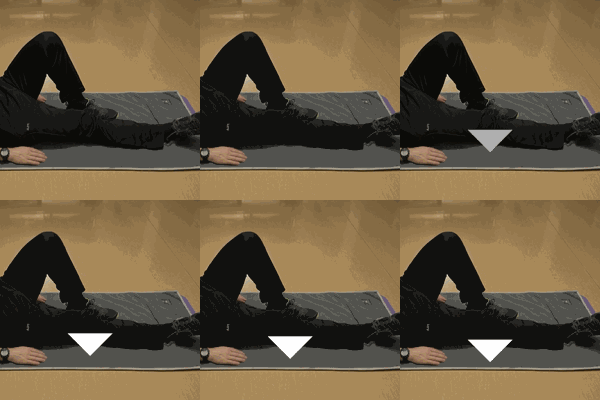 |
Thigh Muscle Contractions
|
Clamshells
|
|
 |
Mini Knee Bends
|
 |
Single Leg Stance
|
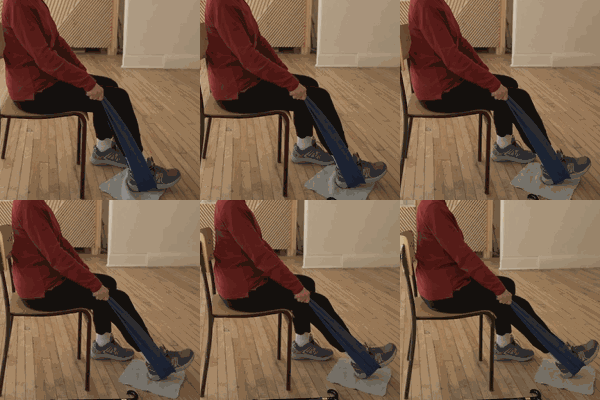 |
Sitting Leg Press
|
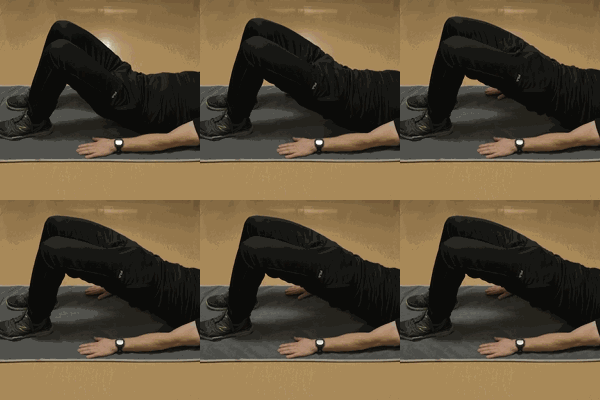 |
Bridge
|
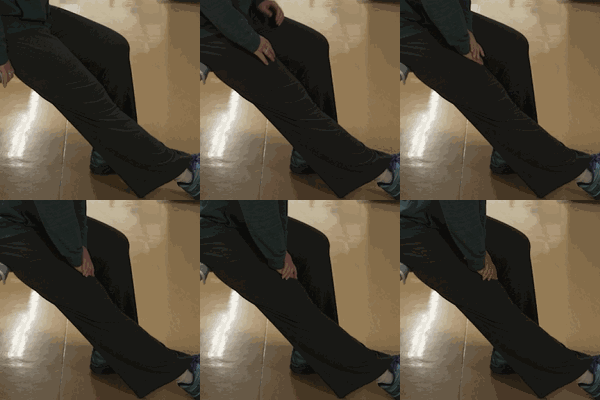 |
Knee Extension – Daily Stretch
|
Sitting Knee Stretch – Daily Stretch
|
Benefits of Exercise in Recovery
It is important to continue exercises during the recovery phase of your surgery. Your care team will provide you with appropriate exercises, many of which may be similar to those found here. There are many benefits to exercising during your recovery, including:
Strengthening and stability
The goal of strengthening and stability exercises is to help you regain strength in the muscles around the affected joint and also in the rest of your leg, your trunk, your other leg and both your arms. For most recovery exercises, you may use special elastic bands or tubing for resistance training. If you have ready access to a swimming pool and if your surgeon says it is safe, water exercises may be added to your overall program. A bicycle can also help with strength and endurance.
Increasing your endurance
The goal is to help muscles in your legs, back, trunk and arms work more effectively over longer periods of time. Depending on your surgery, your physiotherapist may suggest you start pedaling on a recumbent bicycle (the type where you lean back against the seat) or upright bicycle. As you recover, you may progress to a treadmill and to walking outdoors for progressively longer periods of time.
Sources
This resource was made possible through an unrestricted educational grant from Pfizer.